Tailoring Activities to Suit Your Child’s Natural Learning Style
March 10, 2025
Discover how understanding your child’s unique learning style can enhance their educational experience and set them up for success in preschool and beyond.
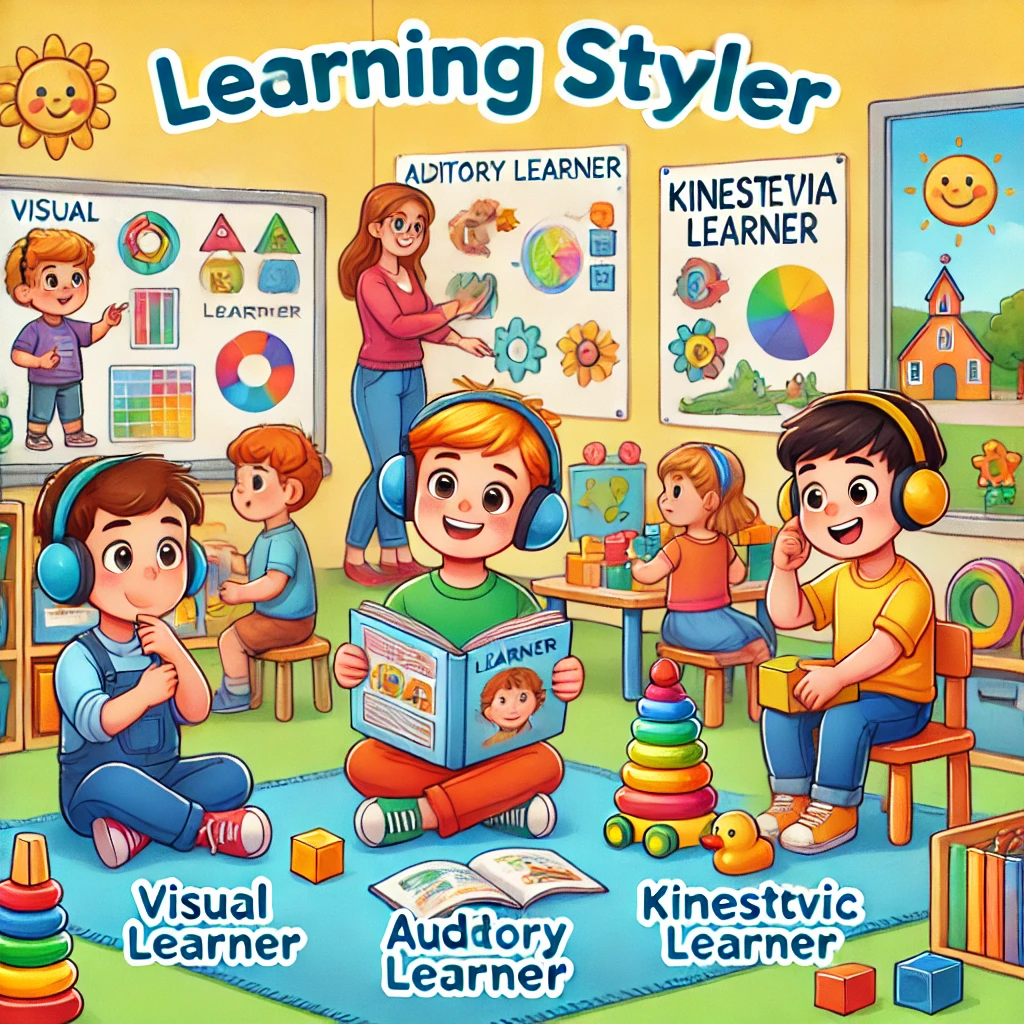
Every child learns differently, and understanding their natural learning style can make a huge impact on their early education journey. At The Little Country Preschool, we recognize that each child absorbs information in their own unique way. By tailoring activities to match their strengths, we help children engage, retain information, and build confidence in their learning abilities.
But what exactly are learning styles, and how can you support your child’s preferred way of learning? Let’s explore the different types of learners and how to adapt activities to help them thrive.
Understanding the 3 Main Learning Styles
Most children fall into one (or a combination) of the following learning styles:
• ✅ Visual Learners – Learn best through seeing and observing
• ✅ Auditory Learners – Learn best through listening and verbal communication
• ✅ Kinesthetic Learners – Learn best through hands-on activities and movement
By recognizing which style your child naturally gravitates toward, you can adapt educational activities to align with their strengths.
1. Visual Learners: Learning Through Seeing
👀
Visual learners absorb information best when it’s presented visually through pictures, charts, demonstrations, and written instructions. They thrive in colorful, structured environments that encourage observation and visual processing.
📌 Signs Your Child is a Visual Learner:
• ✔️ Loves looking at pictures in books
• ✔️ Enjoys puzzles, drawing, and art projects
• ✔️ Remembers things better when they see them written down
• ✔️ Watches facial expressions and body language closely
🎨 Activities for Visual Learners at The Little Country Preschool:
• Storytime with picture books and illustrations 📖
• Flashcards for letters, numbers, and sight words 🔤
• Color-coded charts and visual schedules 🏫
• Art projects and hands-on crafts 🎨
📌 How Parents Can Support Visual Learners at Home:
• Use sticky notes or labels to help with word recognition
• Encourage coloring, drawing, and painting
• Show them step-by-step demonstrations for new tasks
2. Auditory Learners: Learning Through Listening
🎧
Auditory learners excel when they can hear and process information verbally. They enjoy listening to stories, music, and discussions, and they often repeat what they hear to reinforce learning.
📌 Signs Your Child is an Auditory Learner:
• ✔️ Loves listening to stories and songs
• ✔️ Remembers things better when they hear them
• ✔️ Enjoys talking, singing, or repeating words aloud
• ✔️ Follows verbal instructions well
🎵 Activities for Auditory Learners at The Little Country Preschool:
• Singing alphabet and counting songs 🎶
• Reading books aloud with expressive storytelling 📚
• Rhyming games and phonics activities 🔠
• Encouraging group discussions and show-and-tell 🎤
📌 How Parents Can Support Auditory Learners at Home:
• Read books out loud and discuss the story
• Use rhyming games and songs to teach new concepts
• Ask them to explain what they learned in their own words
3. Kinesthetic Learners: Learning Through Movement
🏃♂️
Kinesthetic learners are hands-on explorers who learn best when they can touch, move, and physically engage with their environment. They struggle with sitting still for long periods but thrive in active, interactive learning settings.
📌 Signs Your Child is a Kinesthetic Learner:
• ✔️ Loves building, touching, and experimenting
• ✔️ Enjoys running, jumping, and physical activities
• ✔️ Fidgets or struggles to sit still for long periods
• ✔️ Learns better through doing rather than watching or listening
🤹 Activities for Kinesthetic Learners at The Little Country Preschool:
• Hands-on science experiments 🔬
• Building blocks, puzzles, and sensory bins 🏗️
• Outdoor learning and movement-based games 🌳
• Tracing letters and numbers in sand or playdough ✍️
📌 How Parents Can Support Kinesthetic Learners at Home:
• Encourage interactive activities like baking, gardening, or crafts
• Let them use tactile learning tools (e.g., tracing letters in sand)
• Incorporate movement-based learning, like hopping while counting
• Finding the Right Balance: Blended Learning Approaches
Most children are a combination of learning styles, and incorporating a variety of activities can help them develop well-rounded skills. At The Little Country Preschool, we create an environment that supports all types of learners, ensuring that every child gets the individualized support they need to succeed.
Helping Your Child Learn Their Way
Recognizing your child’s natural learning style can make a significant difference in their preschool experience and long-term academic success. At The Little Country Preschool, we use a personalized, multi-sensory approach to ensure every child feels engaged, confident, and excited about learning!
📅 Want to learn more about our customized learning approach? Schedule a tour today!
🔗 www.thelittlecountrypreschool.com
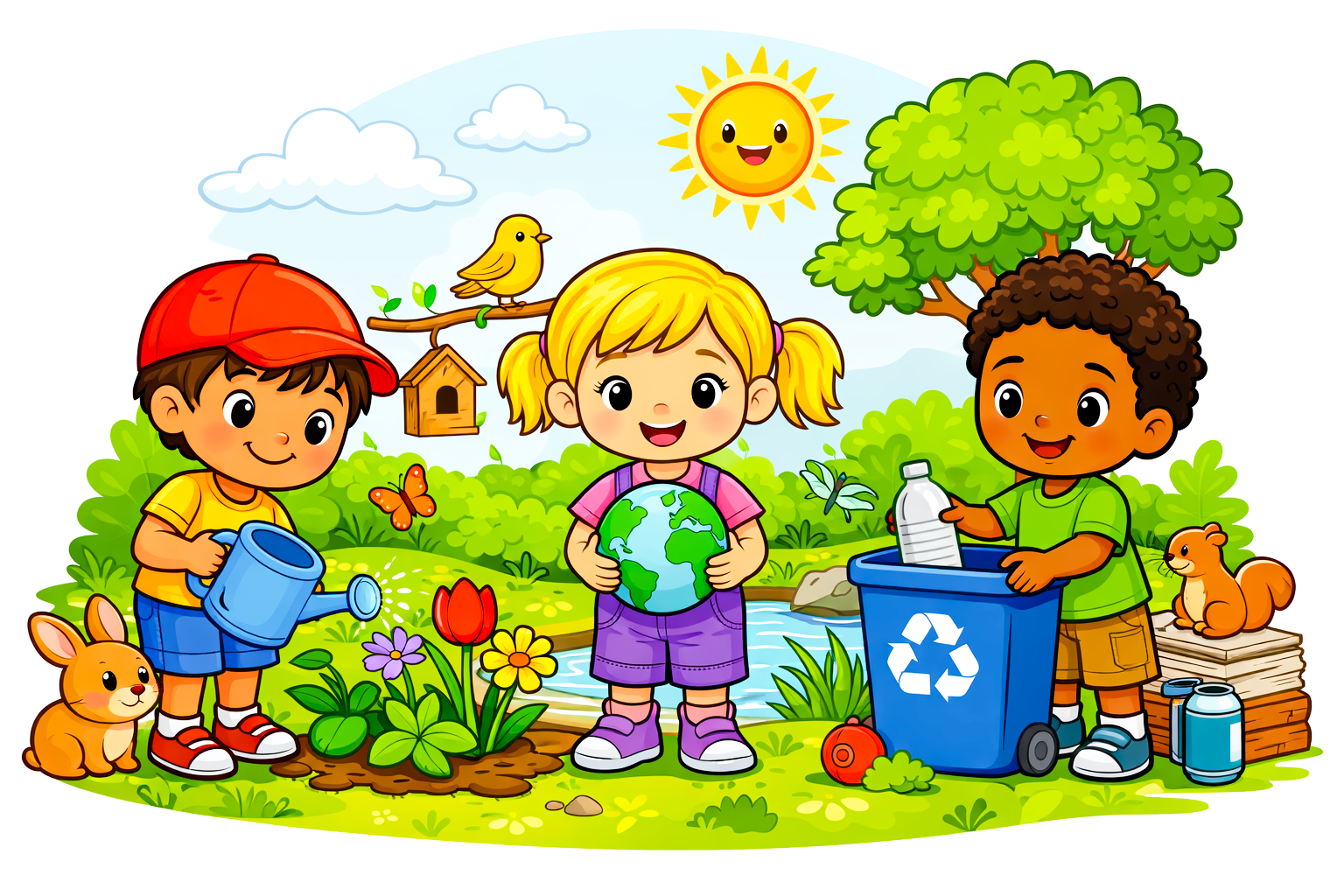
Teaching preschool children about the environment is more than learning about nature, it is about helping them develop curiosity, responsibility, and a sense of connection to the world around them. At a young age, children are naturally drawn to exploring, observing, and asking questions, making it the perfect time to introduce simple environmental concepts in a meaningful and engaging way. When children spend time outdoors, they begin to notice the beauty and changes in nature. They observe plants growing, feel different textures, and become aware of weather and seasons. These experiences support early science learning while strengthening observation and critical thinking skills. Children also develop language skills as they describe what they see, feel, and discover. Simple environmental activities can have a powerful impact. Recycling, watering plants, and learning to care for shared spaces help children understand responsibility and teamwork. These small actions teach children that their choices matter and that they can make a positive difference, even at a young age. Environmental learning also supports emotional development. When children care for plants or participate in group activities like cleaning up outdoor spaces, they develop a sense of pride, accomplishment, and connection. These experiences build confidence and encourage positive behavior. Creative activities inspired by the environment allow children to express themselves while reinforcing learning. Using natural materials for art projects, exploring colors in nature, or creating stories about animals and ecosystems encourages imagination and creativity. These activities also support fine motor skills and problem solving. At Little Country Preschool, we incorporate environmental awareness into everyday learning. Children are encouraged to explore nature, participate in hands on activities, and develop an understanding of how to care for their surroundings. Through guided experiences and play based learning, children build a strong foundation of respect for the environment while developing essential early learning skills. For parents, supporting environmental awareness at home can be simple and meaningful. Taking walks, talking about nature, and involving children in small tasks like recycling or caring for plants can reinforce what they learn in school. These shared experiences strengthen both learning and connection. Helping children understand and care for the environment is an investment in their future. It encourages responsibility, curiosity, and a lifelong appreciation for the world they live in. Give Your Child the Opportunity to Grow, Explore, and Develop Confidence in a Nurturing Preschool Environment That Encourages Curiosity, Responsibility, and a Lifelong Love of Learning, Schedule Your Tour of Little Country Preschool Today At Little Country Preschool, we create meaningful learning experiences that inspire children to explore, care, and grow. Schedule your tour today and discover how our programs help children build confidence, develop essential skills, and connect with the world around them in a positive and engaging way.
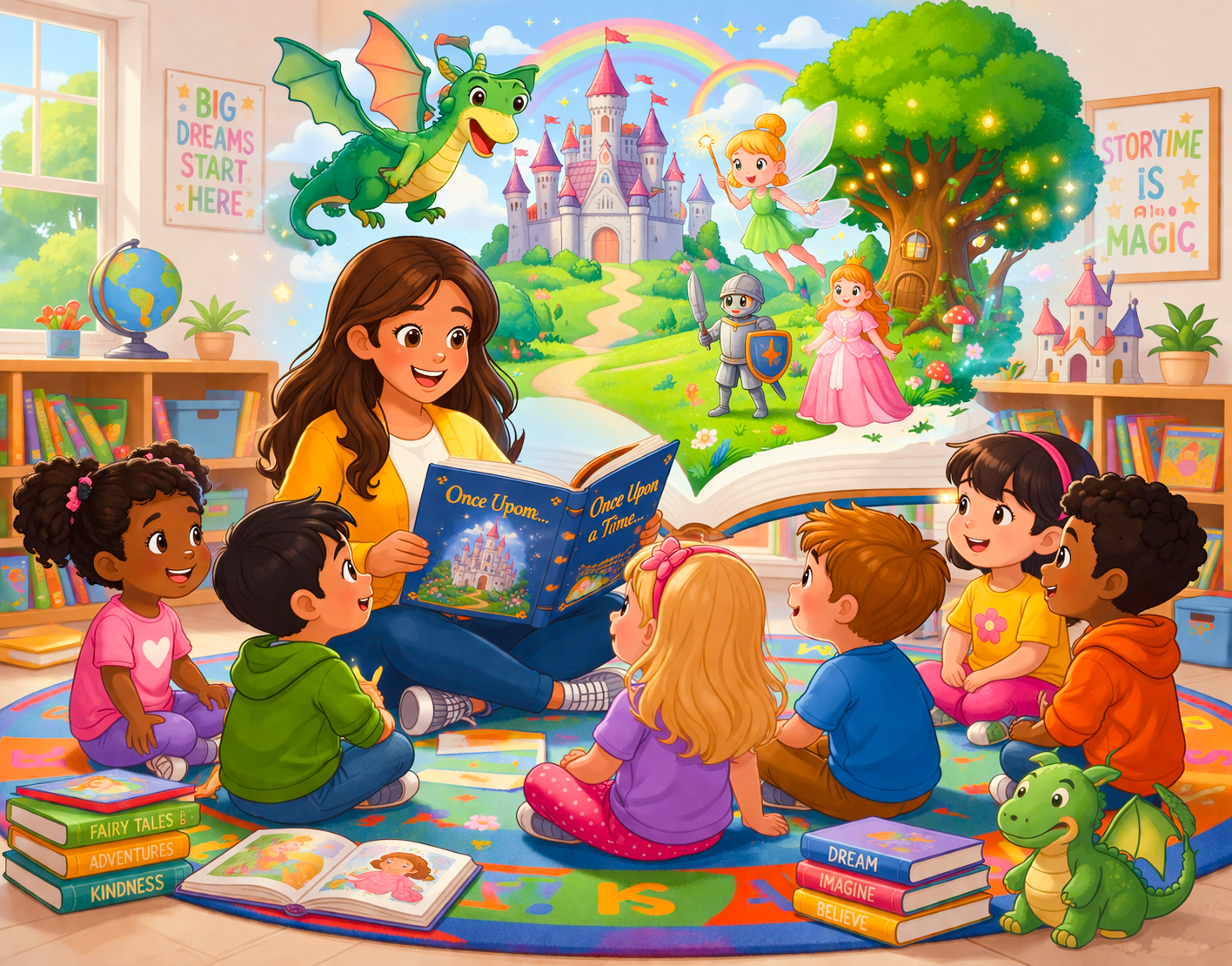
Fairy tales have been part of childhood for generations, offering more than just magical stories and memorable characters. For preschool children, fairy tales are powerful learning tools that help build language, confidence, and emotional understanding in a way that feels natural and engaging. When children listen to fairy tales, they are introduced to new vocabulary, sentence structure, and storytelling patterns. Repetition, rhythm, and familiar phrases help strengthen memory and early literacy skills. As children hear stories again and again, they begin to recognize words, predict outcomes, and participate in storytelling, which builds both confidence and communication skills. Fairy tales also play an important role in emotional development. Through characters and storylines, children are able to explore feelings such as bravery, kindness, fear, and perseverance. Stories allow children to see challenges and resolutions in a safe and supportive way, helping them better understand their own emotions and how to navigate them. Imaginative play is another key benefit of fairy tale learning. When children act out stories, dress up as characters, or create their own magical worlds, they are developing creativity, problem solving skills, and social interaction. These experiences encourage children to collaborate, share ideas, and express themselves freely. At Little Country Preschool, fairy tales are brought to life through storytelling, creative play, art, and group activities. Children might build castles, create their own story endings, or act out their favorite tales with friends. These activities support fine motor skills, language development, and confidence, all while making learning joyful and memorable. Fairy tales also help children understand important values. Themes such as kindness, honesty, courage, and friendship are woven into stories in a way that children can understand and relate to. These lessons become part of how children view the world and interact with others. For parents, incorporating fairy tales at home can be a meaningful way to support learning. Reading together, asking children to retell stories, or encouraging imaginative play can strengthen bonds while reinforcing important developmental skills. At Little Country Preschool, we believe that learning should feel magical, engaging, and full of discovery. Fairy tales provide the perfect opportunity to nurture curiosity, creativity, and confidence in young children while building a strong foundation for future learning. We create a warm and engaging environment where children can explore, imagine, and learn through meaningful experiences. Schedule your tour today and discover how our programs help children build confidence, develop essential skills, and fall in love with learning. Give Your Child the Opportunity to Grow with Confidence, Creativity, and a Lifelong Love of Learning in a Nurturing Preschool Environment That Brings Stories to Life, Schedule Your Tour of Little Country Preschool Today!
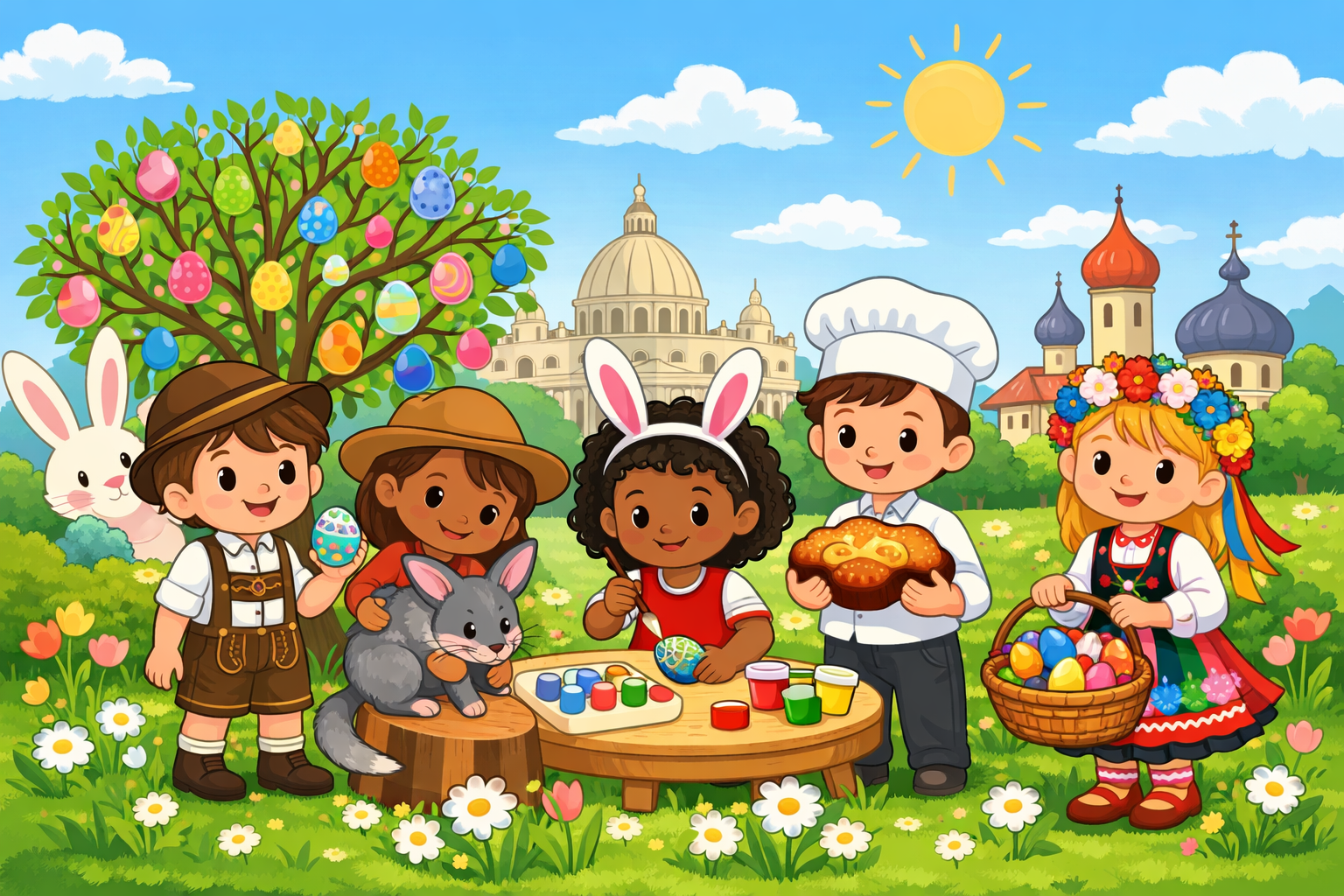
Easter is a joyful time filled with traditions, celebration, and new beginnings. For preschool children, it is also a wonderful opportunity to explore how different cultures celebrate in unique and meaningful ways. Learning about Easter traditions from around the world helps children develop curiosity, appreciation for diversity, and a deeper understanding of the world around them. At Little Country Preschool, we believe that introducing children to global traditions creates rich learning experiences that go beyond the classroom. By exploring how families celebrate Easter in different countries, children begin to see that while traditions may look different, they are all rooted in joy, connection, and togetherness. In the United States, children may be familiar with Easter egg hunts, baskets, and visits from the Easter Bunny. In Germany, children learn about the tradition of decorating trees with colorful eggs, creating a beautiful display of springtime renewal. In Italy, families often gather for large meals and celebrations, emphasizing the importance of togetherness and community. In Australia, children may celebrate with the Easter Bilby, a native animal that replaces the traditional Easter Bunny, introducing children to wildlife and environmental awareness. These global traditions provide wonderful opportunities for storytelling and imaginative play. Teachers can introduce stories about how children in other parts of the world celebrate, encouraging preschoolers to ask questions, share ideas, and express their thoughts. These conversations help build language skills while also fostering empathy and understanding. Creative activities inspired by global Easter traditions can also support early childhood development. Children might decorate eggs using different styles, create crafts inspired by international celebrations, or act out stories that reflect how families celebrate around the world. These activities strengthen fine motor skills, creativity, and confidence as children explore new ideas. Music, movement, and group activities bring these traditions to life in a joyful way. Singing songs, participating in cultural games, and working together on creative projects help children build social skills and develop a sense of belonging. These shared experiences create positive memories that children carry with them as they grow. For preschoolers, learning about traditions from around the world is not about memorizing facts. It is about experiencing joy, curiosity, and connection. When children are exposed to diverse celebrations, they begin to understand that the world is full of different perspectives, and that each one has value. At Little Country Preschool, we create a nurturing environment where children can explore, discover, and grow through meaningful learning experiences. By incorporating global traditions into our curriculum, we help children develop confidence, creativity, and a lifelong love of learning. At Little Country Preschool, we are dedicated to creating enriching experiences that inspire children to explore the world with curiosity and confidence. Schedule your tour today and see how our programs help children grow academically, socially, and emotionally through joyful, engaging, and meaningful learning experiences Give your child the opportunity to experience joyful Learning, cultural discovery, and meaningful growth in a nurturing preschool environment that builds confidence, curiosity, and a lifelong love of learning. Schedule Your Tour of Little Country Preschool Today!
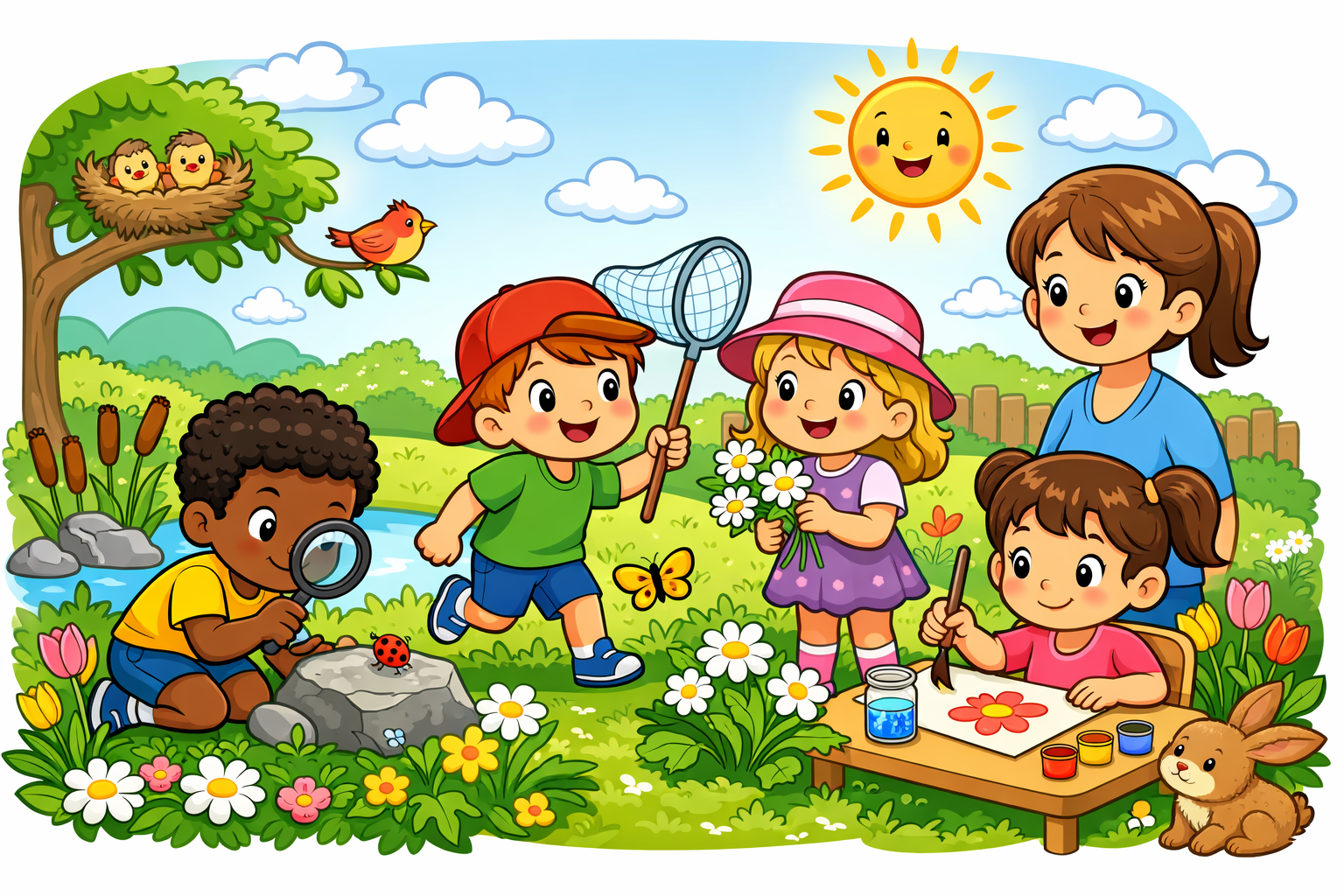
Spring is a season of growth, renewal, and discovery, making it the perfect time for preschool children to explore the world around them. As flowers begin to bloom and days grow brighter, children naturally become more curious, observant, and eager to learn. At Little Country Preschool, we embrace the spring season as an opportunity to spark imagination, encourage exploration, and support meaningful early childhood development. For preschool children, learning is most powerful when it is connected to real life experiences. Spring provides countless opportunities for hands on discovery. Whether children are observing plants grow, exploring textures in nature, or noticing changes in weather, they are building important cognitive and language skills through simple, engaging activities. Outdoor play becomes especially meaningful during the spring months . Time spent outside allows children to develop physical coordination, balance, and confidence while also encouraging creativity and social interaction. Activities like nature walks, collecting leaves, or playing cooperative games help children build friendships and learn how to communicate and work together. Spring themed learning also supports early science concepts. Preschool children begin to understand ideas like growth, change, and cause and effect when they see plants sprout or weather shift. These early observations lay the foundation for future learning while nurturing a sense of wonder and curiosity. Creative expression flourishes during the spring season. Children may paint colorful flowers, create nature-inspired crafts, or use their imagination to tell stories about animals, gardens, and new beginnings. These activities help develop fine motor skills while encouraging children to express their thoughts and emotions in a positive and confident way. Language development is also strengthened through seasonal learning. Teachers introduce new vocabulary related to nature, weather, and growth, while storytelling and group discussions encourage children to share ideas and ask questions. As children describe what they see and experience, they build communication skills that are essential for future academic success. At Little Country Preschool, we believe that each season offers unique opportunities to support a child’s development. Spring allows us to create joyful learning experiences that feel exciting and meaningful to young children. Through a balance of outdoor exploration, creative activities, and guided learning, children develop confidence, independence, and a love of discovery. Parents often notice that during the spring months, their children become more engaged, more expressive, and more eager to participate in learning activities. These moments are not only fun, but they are also building the foundation for lifelong learning and success. At Little Country Preschool, we create a warm, supportive environment where preschool children can explore, learn, and grow at their own pace. Our programs are designed to inspire curiosity, encourage creativity, and help every child feel confident and prepared for the future. Experience how Little Country Preschool brings learning to life through joyful, meaningful, and engaging early childhood experiences. Give Your Child the Opportunity to Grow, Explore, and Thrive in a Nurturing Preschool Environment That Builds Confidence, Curiosity, and a Lifelong Love of Learning, Schedule Your Tour of Little Country Preschool Today!
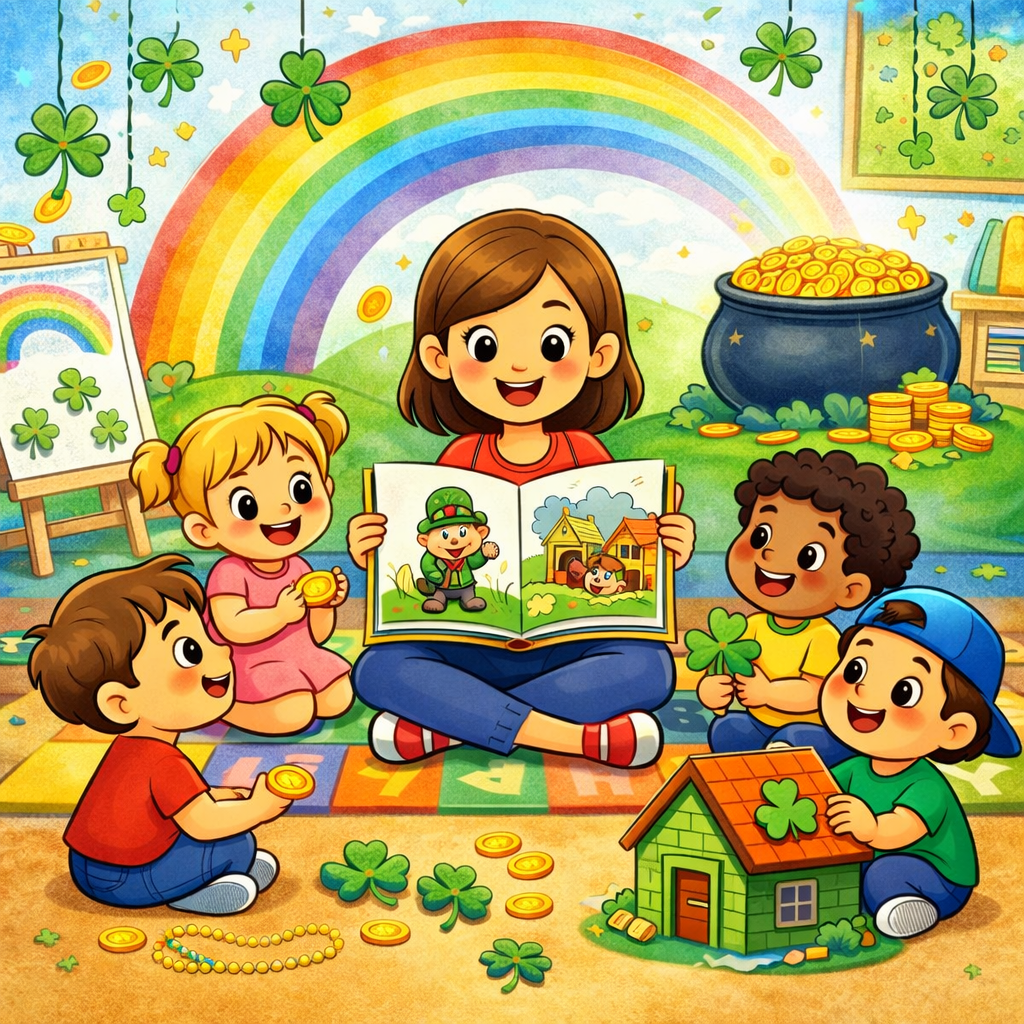
St. Patrick’s Day is a fun and colorful holiday, but for preschool children it is also a wonderful opportunity for learning. Through storytelling, music, art, and imaginative play, young children can explore traditions in a way that strengthens language skills, creativity, and social development. At Little Country Preschool, holidays like St. Patrick’s Day are not only about wearing green or searching for pretend treasure. They become meaningful learning experiences that help children develop confidence, curiosity, and a love of discovery. One of the most powerful ways children learn is through storytelling and other creative activities. St. Patrick’s Day stories about friendly leprechauns, magical rainbows, and pots of gold capture children’s imaginations while also building listening and language skills. When teachers read stories and invite children to repeat phrases, ask questions, or describe what they see, children begin to expand their vocabulary and learn how to express their ideas. Creative activities are another important part of early childhood development. Preschool children might paint rainbows, build leprechaun houses from blocks, or create their own “lucky treasure” art projects. These hands on experiences help strengthen fine motor skills while encouraging children to explore colors, shapes, and patterns. Music and movement also play a joyful role in the celebration. Singing songs about rainbows, clapping along to rhythms, or participating in playful movement games allows children to build coordination and confidence while learning to work together as a group. These activities support both physical development and social connection. Holiday themed activities also encourage cooperation and kindness. When children work together to find hidden “gold coins,” build imaginative structures, or share their artwork with classmates, they practice communication and teamwork. These small moments help children learn how to take turns, solve problems, and celebrate each other’s creativity. For preschool children, learning happens best when it feels like play. By weaving seasonal themes like St. Patrick’s Day into everyday activities, teachers create an environment where children feel excited to explore, ask questions, and participate. Parents often notice that when learning is joyful and engaging, children become more confident and eager to talk about what they experienced at school. These early positive experiences with learning help build the foundation for future academic success. At Little Country Preschool, our goal is to create a nurturing environment where children feel safe, curious, and inspired every day. Through stories, creative play, music, and hands on discovery, children develop the skills they need for lifelong learning. Give Your Child the Joyful, Nurturing Preschool Experience That Builds Confidence, Curiosity, and a Lifelong Love of Learning, Schedule Your Tour of Little Country Preschool Today!
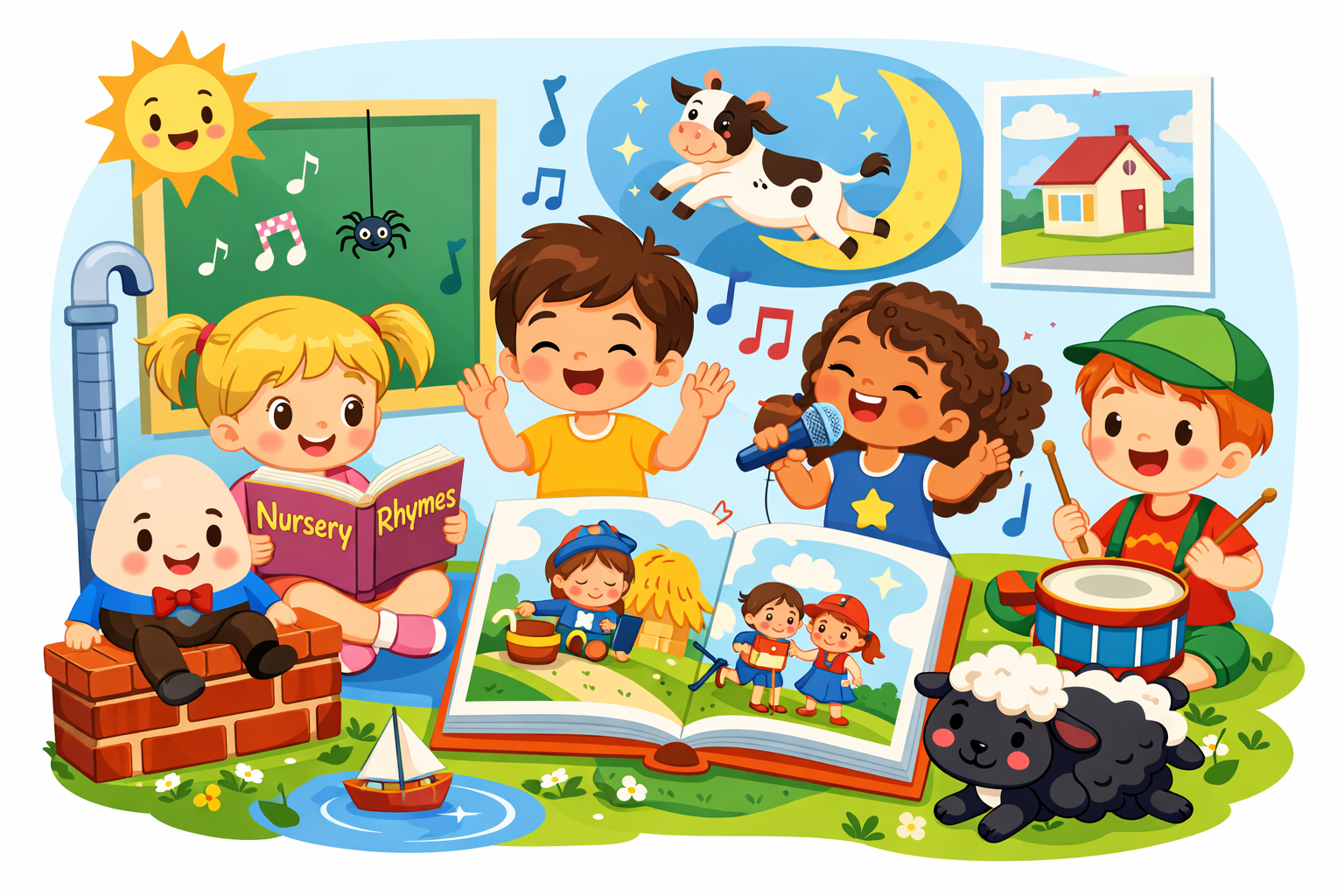
Nursery rhymes may seem simple, playful, and even a little silly, but they play an important role in early childhood development. For generations, rhymes like Twinkle Twinkle Little Star and Humpty Dumpty have helped young children develop language, memory, and listening skills in ways that feel natural and joyful. At Little Country Preschool, nursery rhymes are more than fun songs, they are powerful learning tools that support early literacy and school readiness. One of the biggest benefits of nursery rhymes is how they introduce children to rhythm and sound patterns. When preschoolers hear rhyming words and repeating phrases, they begin to recognize how language works. This helps strengthen phonemic awareness, the ability to hear and identify sounds within words, which is one of the most important foundations for learning to read. Nursery rhymes also support vocabulary growth. Even short rhymes introduce new words and concepts that expand a child’s language skills. As children repeat these rhymes, they become more comfortable speaking, listening, and expressing themselves. This builds confidence, which is essential as children prepare for kindergarten and future learning experiences. Another powerful benefit of nursery rhymes is memory development. The repetitive structure of rhymes makes them easier for young children to remember. When children recite rhymes from memory, they are practicing sequencing, focusing, and recalling. These cognitive skills help support learning across many subjects later in school. Nursery rhymes also encourage imagination and creativity. Children often act out rhymes through movement, storytelling, and dramatic play. When a child pretends to be Jack climbing a hill or a star twinkling in the sky, they are practicing self-expression while strengthening social and emotional development. At Little Country Preschool, we bring nursery rhymes to life through music, movement, art, and storytelling activities. Children sing together, explore rhythm with instruments, create crafts inspired by their favorite rhymes, and engage in playful learning experiences that help them connect language with creativity. For parents, nursery rhymes are a wonderful way to continue learning at home. Singing rhymes together during car rides, bedtime, or playtime helps reinforce language development and creates special bonding moments. Even a few minutes of shared reading or singing can make a meaningful difference in a child’s early learning journey. Early childhood is a time when curiosity and imagination grow quickly. By introducing nursery rhymes in a nurturing and engaging environment, children develop the confidence and communication skills they will carry with them throughout their education. Give Your Child the Confidence, Creativity, and Early Learning Foundation They Need for a Bright Future The early years of childhood are the perfect time to nurture language, curiosity, and a love of learning. At Little Country Preschool, we create joyful learning experiences that help children grow academically, socially, and emotionally. Come Discover how Little Country Preschool helps preschool aged children build confidence, strengthen early literacy skills, and develop a lifelong love of learning. Schedule your tour today!
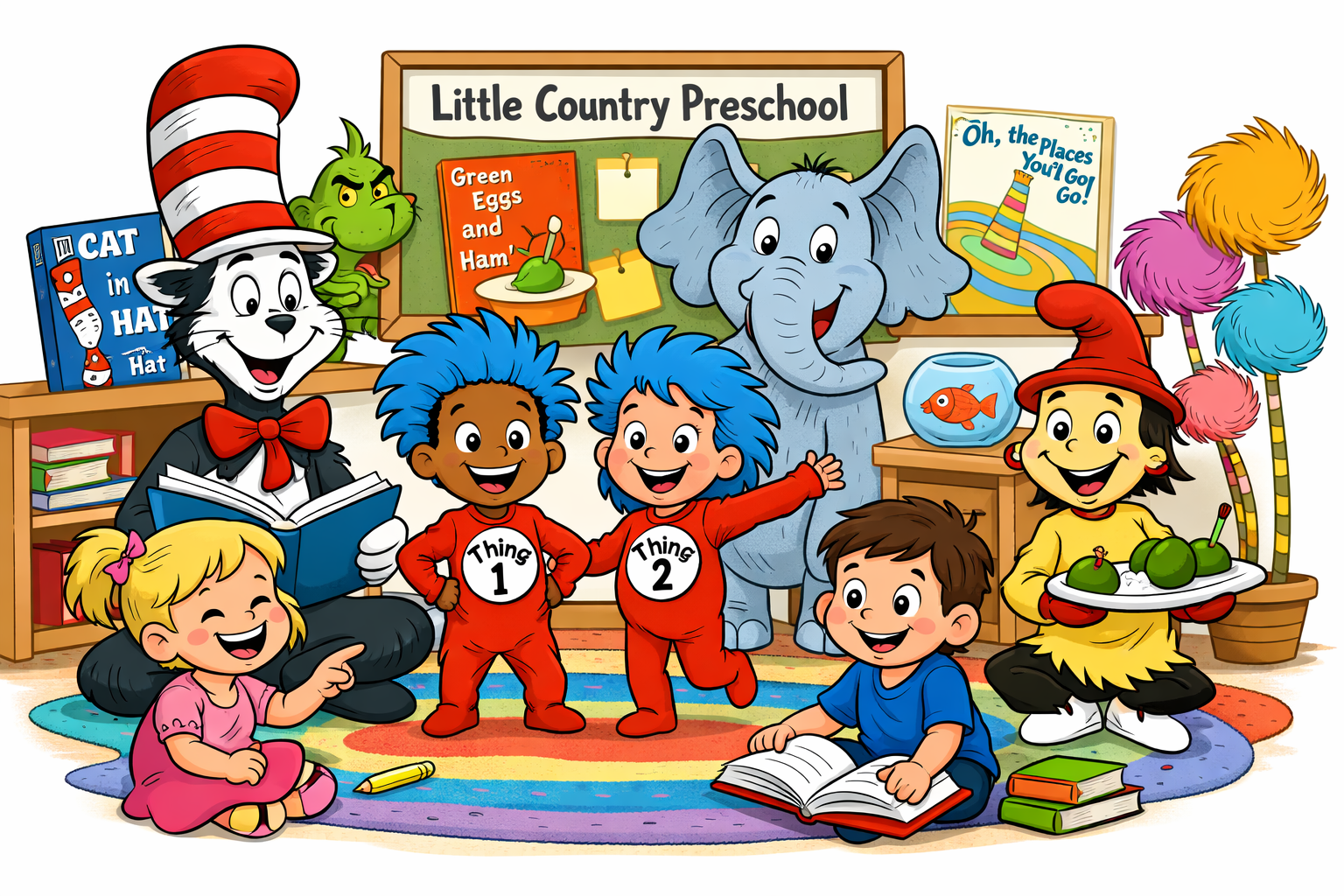
When preschool classrooms celebrate Dr. Seuss, it is much more than silly rhymes and colorful characters. Behind the playful language and whimsical stories lies a powerful foundation for early literacy, confidence, and creative thinking. At Little Country Preschool, our Dr. Seuss theme week is designed to nurture essential developmental skills while keeping learning joyful and engaging. Dr. Seuss books are uniquely structured to support early readers. The rhythmic patterns, repetition, and playful rhymes help children develop phonemic awareness, a critical building block for reading success. When preschoolers hear and repeat rhyming words, they begin recognizing sound patterns that strengthen decoding skills later in kindergarten and elementary school. Beyond literacy, Dr. Seuss stories encourage imagination and curiosity. Books like Oh, the Places You’ll Go! and The Cat in the Hat invite children to think creatively, solve problems, and explore new ideas. Imaginative thinking is not just entertainment. Research shows that creative play strengthens cognitive flexibility, emotional resilience, and critical thinking skills. During Dr. Seuss week, preschoolers engage in interactive read-aloud sessions, rhyming games, creative art projects, and dramatic play inspired by beloved characters. These activities promote: • Vocabulary development • Listening and comprehension skills • Early reading confidence • Social interaction and cooperation • Self-expression through storytelling and art Children also practice retelling stories in their own words, which strengthens memory, sequencing skills, and communication abilities. When a child excitedly explains what happened to the Grinch or imagines a new adventure for Thing One and Thing Two, they are building narrative skills that support future writing development. A Dr. Seuss themes also creates opportunities for meaningful conversations about kindness, perseverance, and celebrating individuality. Stories like Horton Hears a Who gently teach empathy and standing up for others, while The Sneetches opens discussion about inclusion and fairness. These social-emotional lessons are just as important as academic readiness in the preschool years. For parents, incorporating Dr. Seuss at home can be simple and impactful. Reading together daily, asking open-ended questions about characters’ choices, and encouraging children to create their own rhyming stories strengthens the home-school connection. Even a short bedtime story can become a powerful literacy-building moment. At Little Country Preschool, we believe early childhood education should spark curiosity while building strong academic foundations. Dr. Seuss week is a perfect example of how playful learning supports real developmental growth. Through laughter, rhythm, and imagination, children gain confidence in their abilities and excitement about books. If you are looking for a nurturing preschool environment that builds early reading confidence, strengthens creativity, and prepares your child for lifelong learning success, schedule your tour today and discover how Little Country Preschool turns joyful themes like Dr. Seuss into meaningful educational growth for preschool aged children.’ Schedule Your Tour Todayl
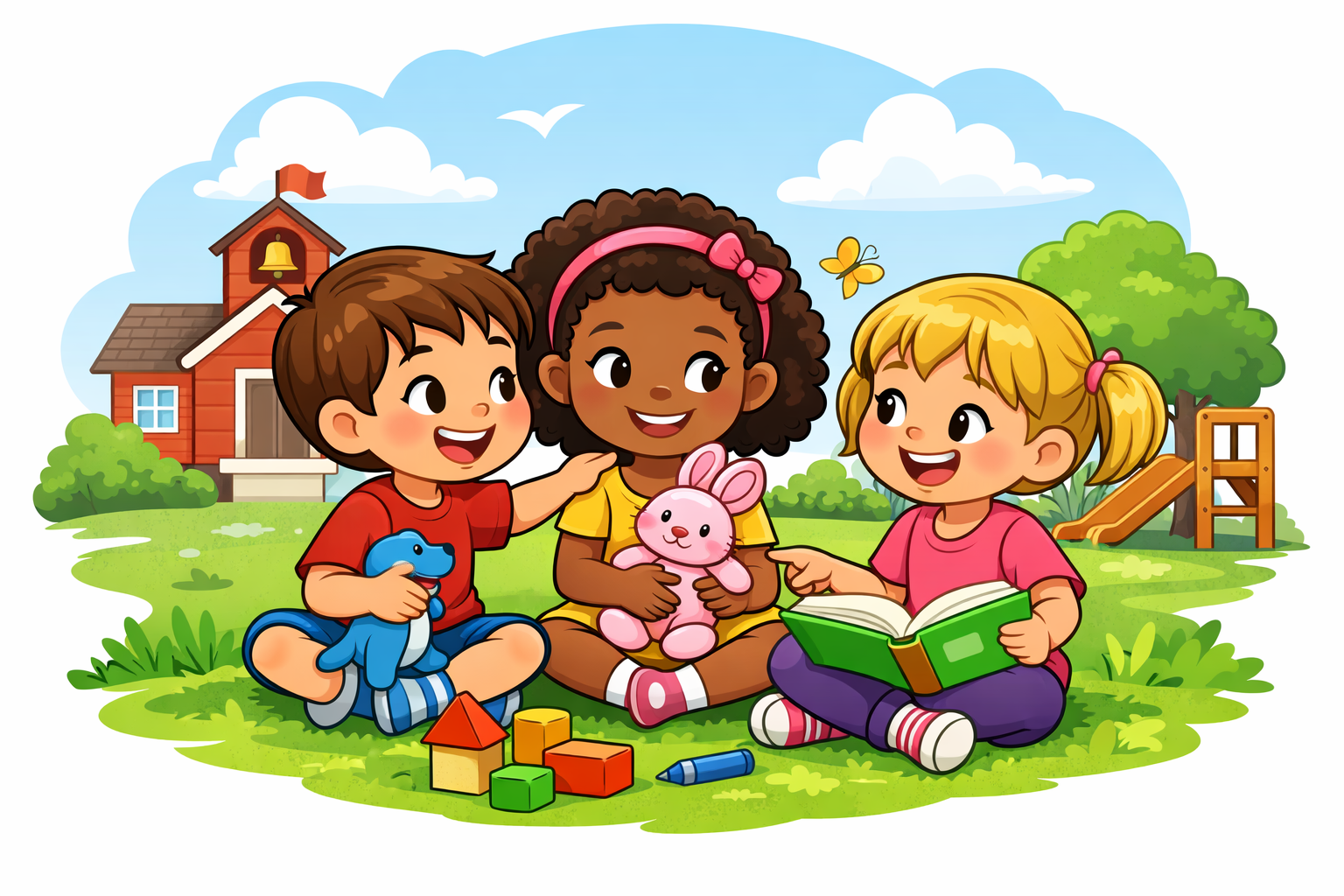
Friendship may look simple in preschool, shared crayons, giggles on the playground, or two small hands building the same block tower. Yet beneath those everyday moments, something powerful is happening. Preschoolers are learning how to care, communicate, and connect. These early lessons in friendship and caring for others form the foundation for emotional intelligence, resilience, and future academic success. At Little Country Preschool, this week’s theme, Friendship and Caring for Others, focuses on helping children understand what it means to be a good friend and how kindness strengthens community. Why Friendship Skills Matter in Early Childhood Between ages three and five, children begin developing the social and emotional skills that will shape their school experience and relationships for years to come. Learning how to share, take turns, and recognize another child’s feelings are not just classroom expectations. They are essential life skills. Research consistently shows that strong early social skills are linked to: • Improved classroom behavior • Higher academic performance • Better conflict resolution abilities • Greater emotional regulation When children feel safe, valued, and connected to peers, they are more confident learners. Friendship creates belonging, and belonging builds courage. Teaching Empathy in Preschool Empathy does not appear overnight. It is gently cultivated through modeling, guided practice, and daily experiences. In a preschool environment, caring behaviors are nurtured through role playing and storytelling. Children act out scenarios about helping a friend, using kind words, or solving simple conflicts. Stories about friendship allow them to recognize emotions in characters and connect those feelings to real life. Collaborative play and Emotion vocabulary development Group art projects, partner games, and cooperative building activities teach children that working together can be more rewarding than working alone. When teachers label feelings such as happy, frustrated, excited, or sad, children begin to understand their own emotions and recognize them in others. These small, consistent moments teach children that their actions matter and that kindness has a visible impact. How Parents Can Encourage Friendship at Home The lessons children learn at preschool grow stronger when reinforced at home. Parents can support friendship and caring behaviors by: • Modeling respectful communication • Encouraging children to talk about their feelings • Praising acts of kindness • Setting up playdates to practice social skills • Reading books about friendship and cooperation Simple questions such as “How did you help someone today?” or “How did your friend feel when that happened?” gently guide children toward empathy and reflection. Building a Caring Community Together At Little Country Preschool, we believe that social development is just as important as academic readiness. When children learn to care for others, they build confidence, compassion, and leadership skills that extend far beyond the classroom. Friendship in preschool is not just about having someone to sit next to at snack time. It is about learning trust, respect, and responsibility. It is about discovering that kindness makes the world feel safe. If you are looking for a nurturing preschool environment where your child can develop meaningful friendships, strong social skills, and a lifelong foundation of empathy and confidence, we invite you to connect with us today and discover how Little Country Preschool helps children grow into kind, capable learners. Schedule Your Tour Today! If you want your preschooler to build strong friendships, grow in confidence, and learn the lifelong value of kindness in a warm and nurturing environment, we invite you to schedule your tour today. Come see how Little Country Preschool creates a safe, joyful space where children feel valued, supported, and excited to learn each day. We would love to welcome your family and show you how meaningful early friendships can shape your child’s future.
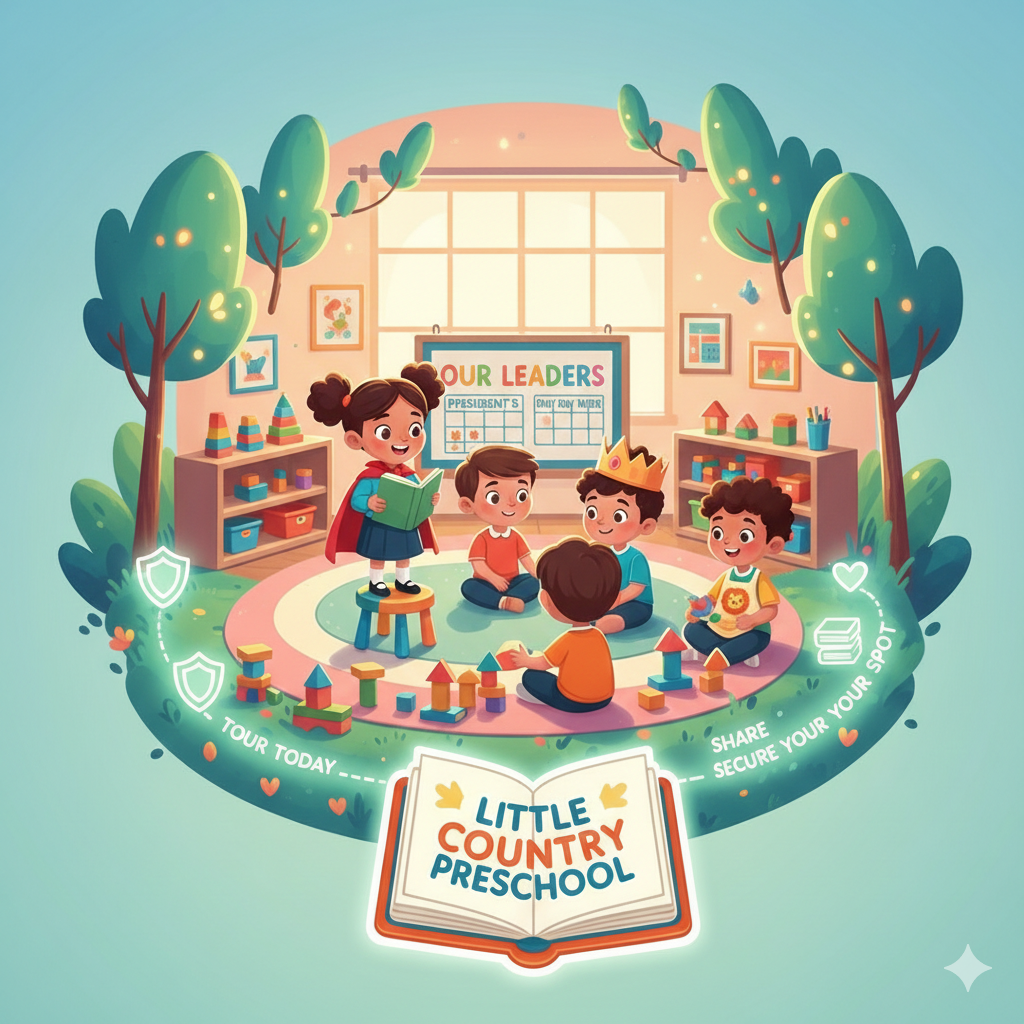
The halls of Little Country Preschool are buzzing with excitement this week as we celebrate our theme, Our Leaders. While President’s Day provides a wonderful historical backdrop for our lessons, we believe that leadership for a preschooler is less about holding office and more about developing the character, confidence, and empathy required to navigate the world. For parents, this week is a perfect opportunity to look at the small, everyday moments that build the foundation for a lifetime of influence and integrity. The Heart of Preschool Leadership When we think of great leaders, we often think of grand speeches or bold decisions. However, for a three or four-year-old, leadership begins with self-regulation and social awareness. At Little Country Preschool, we define a leader as someone who can solve a problem, help a friend, or take responsibility for their actions. These are the "soft skills" that modern research identifies as the most critical predictors of future success. By focusing on our theme of leaders, we are teaching our students that their voices matter. Whether they are choosing a game for their peers or learning how to wait their turn with patience, they are practicing the art of leading themselves before they lead others. Fostering Independence at Home Parents often ask how they can support these lessons outside of the classroom. One of the most effective ways to nurture a young leader is to provide them with age-appropriate autonomy. This could be as simple as letting your child choose between two outfits in the morning or asking for their "expert" opinion on what vegetables to have for dinner. When a child feels that their choices have an impact, their confidence flourishes. A confident child is more likely to stand up for a peer on the playground or try a challenging new task without the fear of failure. These small acts of independence are the building blocks of the resilience found in the world's most respected figures. Leading with Kindness Perhaps the most important trait we emphasize during this special week is empathy. A true leader understands the feelings of those around them. We encourage our families to talk about kindness as a "superpower" of leadership. By naming emotions and discussing how our actions affect others, we help our children develop a moral compass. As we honor the leaders of our past this President’s Day, we are even more excited about the leaders of our future, the children in our care today. We are proud to partner with you in this journey of growth, discovery, and character building. Together, we can ensure that every child at Little Country Preschool feels empowered to lead with a kind heart and a bold spirit. Discover the Life-Changing Magic of Our Nurturing Preschool Community Today We invite you to step inside our classrooms and experience the warmth of a school that sees the greatness in your child. Scheduling a tour is the first step toward finding a second home where your little leader will be protected, challenged, and deeply valued. Come see for yourself how our specialized curriculum turns curiosity into confidence and kindness into leadership. Your child deserves an extraordinary beginning, and we would be honored to show you exactly how we make that happen every single day. Schedule your private tour today to secure a spot for your precious little one.
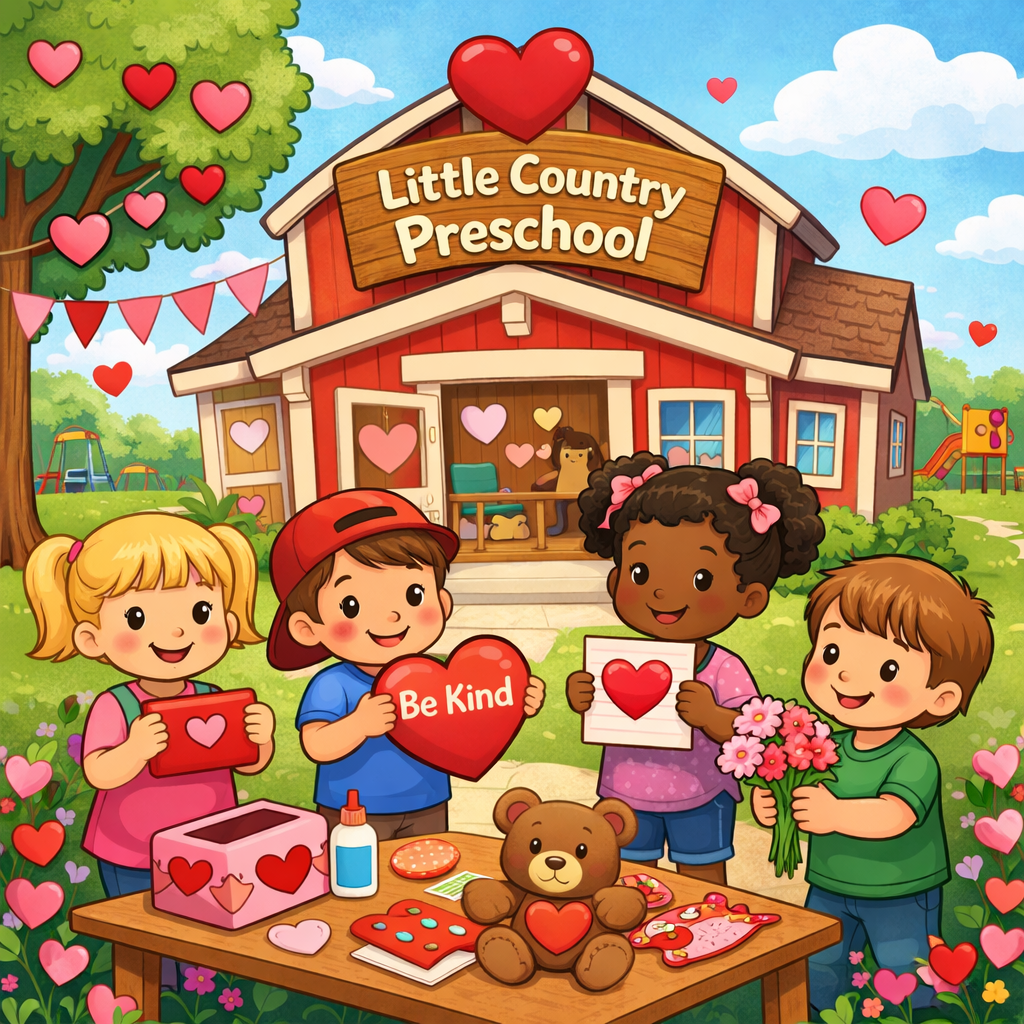
Valentine’s Day in early childhood is not about candy or cards, it is about connection. For preschool aged children, love is experienced through safety, kindness, routine, and feeling seen. These early experiences shape how children understand relationships, empathy, and their own sense of belonging. At Little Country Preschool, Valentine’s is an opportunity to gently reinforce what matters most, caring for others, expressing feelings, and learning that love shows up in everyday moments. How Preschool Valentine’s Activities Nurture Emotional Growth and Kind Hearts Young children are naturally loving and open, but they still need guidance in understanding emotions and relationships. Valentine’s themed activities give children simple, age-appropriate ways to practice kindness, sharing, and empathy. In a preschool setting, love is taught through actions like: • Using kind words with friends • Learning how to take turns • Practicing gratitude • Creating handmade cards as expressions of care • Celebrating friendships in inclusive ways These experiences help children learn that love is not something we wait for, it is something we practice. Why Feeling Loved and Secure Supports Learning and Confidence Children learn best when they feel emotionally safe. When a preschool environment emphasizes warmth, respect, and connection, children are more willing to explore, communicate, and take healthy risks in learning. Valentine’s is a reminder that emotional development is just as important as academic growth. Feeling loved helps children: • Build self confidence • Develop trust in caregivers and peers • Regulate emotions more effectively • Feel comfortable expressing themselves These skills form the foundation for lifelong learning and healthy relationships. Teaching Children That Love Is Shown Through Actions, Not Just Words At the preschool age, love is not abstract. It is experienced through consistency, patience, and gentle guidance. Valentine’s offers a meaningful opportunity to show children that love is demonstrated through caring behavior, listening, and respect.When children see kindness modeled by teachers and caregivers, they learn how to extend that same kindness to others. These lessons stay with them far beyond the holiday. Partnering With Families to Create a Loving Learning Community Parents play an essential role in reinforcing these values at home. When families and educators work together, children experience love and support as something steady and reliable. At Little Country Preschool, we believe that nurturing emotional well being creates confident, compassionate learners who feel secure in who they are and how they connect with others. Come See Where Your Child Is Loved, Supported, and Grows With Confidence Every Day If you are looking for a preschool where your child is truly known, cared for, and encouraged to grow with kindness and confidence, we invite you to tour Little Country Preschool. See how our warm environment, thoughtful teachers, and loving community help children thrive emotionally and academically. Schedule a tour today and experience a place where learning is rooted in love, connection, and belonging.





